01
Ten documents, every week
Your analyst reads ten documents to answer one question, then does it again next week.



Analyse
Compare the primary endpoints across the three approvals, with the page for each.
Approval AChange from baseline in the main scoreReview A, p. 31
Approval BTime to first eventReview B, p. 12
Approval CShare of patients who respondReview C, p. 8
What will next year's label update say?
The documents do not cover this.
What it does
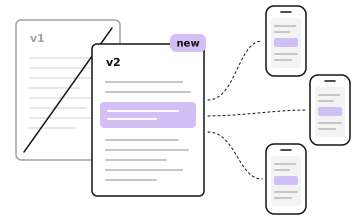
Your papers, reports, reviews and filings. Add the new version when one changes.
In your own words. Hippocampus compares what every document says.
The answer draws on many documents, and each claim links to the full document and the page.
If your documents do not cover it, it says so. It does not guess.
The problem
Your analyst reads ten documents to answer one question, then does it again next week.
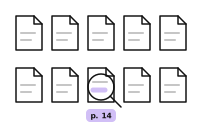
A chat assistant answers with confidence and no page reference. You check each claim by hand.
The answer sits in a table in one document and a footnote in another.
What you can count on
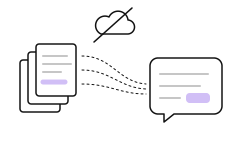
From your papers, reports and filings. Not from the internet and not from guesses.
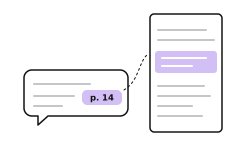
Each answer lists the document, the section and the page, so you can check each claim.
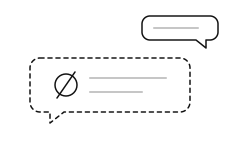
If your documents do not cover the question, it tells you. No answer is better than a wrong one.
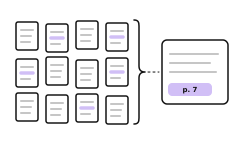
One question draws on every document you have added.
Why it stays low cost
Customer story
Atrogi is a pharmaceutical research company. Its team asks Hippocampus questions across FDA reviews and labels: 10 documents, 2,198 pages. With Claude Opus 5 writing the answers, Hippocampus found the right passages for every question and got 93 of 96 answers right. It declined the one question the documents cannot answer, six times out of six.
93 of 96 answers correct with Claude Opus 5 writing the answers, on Atrogi's question set. Three answers missed. We did not run other systems with Opus 5.
Fits your setup
Ask a model about a few pages and it does well. Ask it across thousands and its answers get worse. Hippocampus keeps the model on the right pages, so it stays accurate as the collection grows.
Connects to SharePoint, Google Drive and Box.
PDF, Word, PowerPoint, Excel and scanned pages.
EU-hosted by default, or in your own cloud or on your own servers.
You set who sees what by role or function.
You choose the model per workspace and can change it without importing again.
Pick another model. The memory stays as it is.
Questions
Starter keeps 25,000 pages. Corporate is sized to your collection.
Hippocampus reads each document once and builds a memory of sections with summaries, and a question searches that memory without a generative model. Only the passages that answer the question go to the model, which leaves room for the strongest model on the hardest questions.
Yes. Each answer lists the document, the section, the page range and the text it used.
Hippocampus says the documents do not cover it. It does not guess.
On the FDA set, OpenAI File Search got 75.0% right and Hippocampus 83.3%, with the same model answering. On FinanceBench the gap is 52.3% against 92.2%.