Hippocampus
The memory layer for your company brain.
Hippocampus structures your documents into a memory any AI can answer from. Ensuring accurate and fast answers at a fraction of the cost.
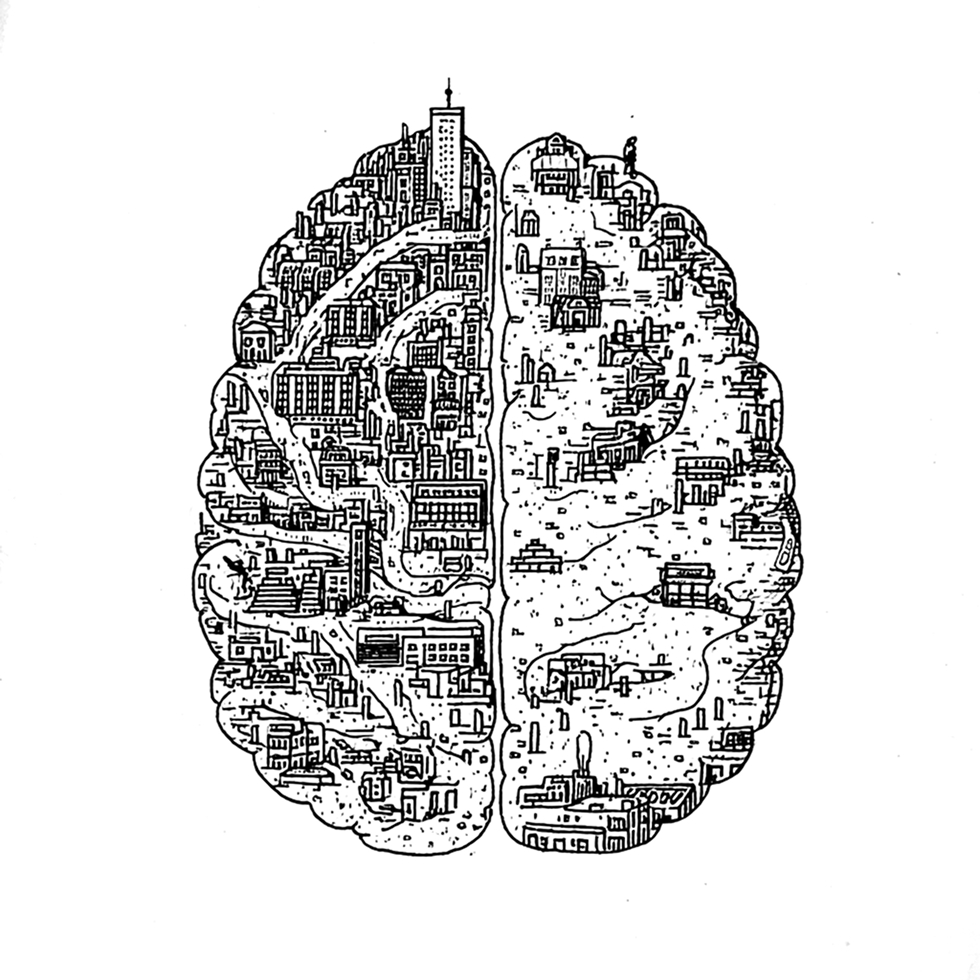
AI works for individuals.
It breaks at organizational scale.
Most enterprise AI efforts stall in the same place: confident but unverifiable answers, quality that collapses with volume, and knowledge locked into a single vendor's stack. Without an organizational memory you actually control, AI stays a promising demo.
Hallucinations
No AI can hold an entire organization's knowledge at once, so it hallucinates.
Exploding costs
More data means exponentially higher costs, and answers that get worse, not better.
No sharing
Every person's AI is its own island. Knowledge does not transfer across people or services.
A memory layer that structures your data before AI models use it.
Hippocampus sits between your documents and any AI. It reads your material once, organizes it into a structured memory, and hands the model exactly what it needs to answer a given question.
When your team uses AI, it no longer wades through everything every time. It asks the memory, and the memory already knows where to look. Answers come back faster, cheaper, more accurate, and verifiable to the source.
Scattered across drives, tools, and inboxes.
Read once, organized into one shared memory.


Reasons from what your organization knows.
Every company brain runs on memory.
"The biggest blocker to AI automation of companies is no longer the models. Now the blocker is the domain knowledge."
The company brain is the idea everyone is chasing: one system that knows what your whole organization knows and reasons with it. The reasoning was never the hard part. Modern models already reason well. The missing piece is a memory the brain can think from, one that is structured, verifiable, and shared across every team. It sounds obvious, but it has been impossible to build until now.
That memory is Hippocampus. It turns your documents into a knowledge layer any model can read and trust, so a company brain reasons from what your organization has actually learned instead of whatever fits in a context window. We call the system that builds and compounds that memory a knowledge factory.
The answer is not brute force.
Most AI setups reread everything for every question, so costs climb with every document you add. Hippocampus works smarter. Its patent pending indexing organizes knowledge in layers, so the model reads only what a question actually needs.
lower token use for the same answer quality. You pay less and wait less.
indexing technology. Efficiency by design, not bigger context windows.
every answer links back to its source, which keeps hallucinations in check.
Plug and play for your entire organization.
Patent pending indexing means the AI reads what's relevant, not everything. Token use drops 50 to 90%, so you pay less and wait less.
Works with Claude, GPT, Gemini, or open models, and you can switch anytime without rebuilding.
Each person and each AI agent sees only what they're allowed to. Access is controlled at every level.
Runs on premises, in your own cloud, or fully offline. Your data never has to leave your control.
Both your people and the AI can maintain and correct the knowledge.
Every use adds to what it knows. Expertise stays as people leave, and answers keep improving.
Your keys. Your data. Sealed even from us.
Hippocampus runs on your infrastructure: on premises, in your cloud, or fully offline. Any modern LLM plugs in, cloud or self hosted. Switch models tomorrow without rebuilding your knowledge layer.
Access is controlled at every level: each user, and each AI agent, only sees what they should. Guiding principle: you can't leak what you don't know.
One place your whole organization can ask.
We'll start with a live walkthrough on a representative dataset: a department's documents, a regulatory archive, a set of contracts. You'll see the answers, the sourcing, and the guardrails before your own data is ever involved.
Common questions about Hippocampus.
Hippocampus is an external memory layer for organizations. AI reads, summarizes, and connects your documents into a knowledge layer your team can browse, edit, and verify. Any modern AI model can query it. Every answer links back to its source.
Built on proprietary technology, not a thin wrapper over an LLM.
A company brain is the goal: one system that knows what your whole organization knows and reasons with it. Hippocampus is the memory that makes it possible.
Models supply the reasoning. Hippocampus supplies the structured, verifiable, shared memory they reason from, built once from your documents and compounding over time. Without that memory layer, a company brain is just a model guessing from whatever fits in its context window.
RAG retrieves chunks of raw text at query time. The model processes them on every request. Costs scale with each query.
Hippocampus reads your documents once, builds a layered memory of source, summary, and index, then queries the right layer at the right depth. The model never needs to re-process the underlying files. Answers are faster, cheaper, and more consistent.
RAG is a retrieval pattern. Hippocampus is a memory architecture.
A vector database stores embeddings. That is a storage layer. You still need to decide what goes in, what gets queried, and how results are used.
Hippocampus is the layer above the storage: ingestion, summarization, multi-level indexing, source traceability, and self-tuning over time. The vector store is one possible substrate Hippocampus sits on top of.
Vector database is infrastructure. Hippocampus is the system.
Yes. Hippocampus runs on your infrastructure: on premises, in your private cloud, or fully offline. Your keys and your data stay under your control, sealed even from us.
Access is controlled at every level. Each user and each AI agent sees only what they should. Guiding principle: you cannot leak what you do not know.
Any modern AI model. Claude, GPT, Gemini, or open-weight models like Llama and Mistral. Cloud-hosted or self-hosted.
You can switch models without rebuilding your knowledge layer. The memory architecture is decoupled from the model.
Most enterprise AI systems re-process raw documents on every query. The same files get ingested again and again. Tokens compound.
Hippocampus reads each document once, builds a layered memory of source, summary, and index, then queries the right depth for each question. The model reads what is relevant, not everything.
The result is a 50 to 90% drop in tokens consumed for equivalent answer quality. You pay less and wait less.
Every answer links back to its source. Auditable, not black box.
AI agents draft and peer-review responses. Humans validate the high-stakes calls. The split is roughly 95/5: AI handles the volume, humans handle the consequence.
Answers without verifiable sources do not ship.